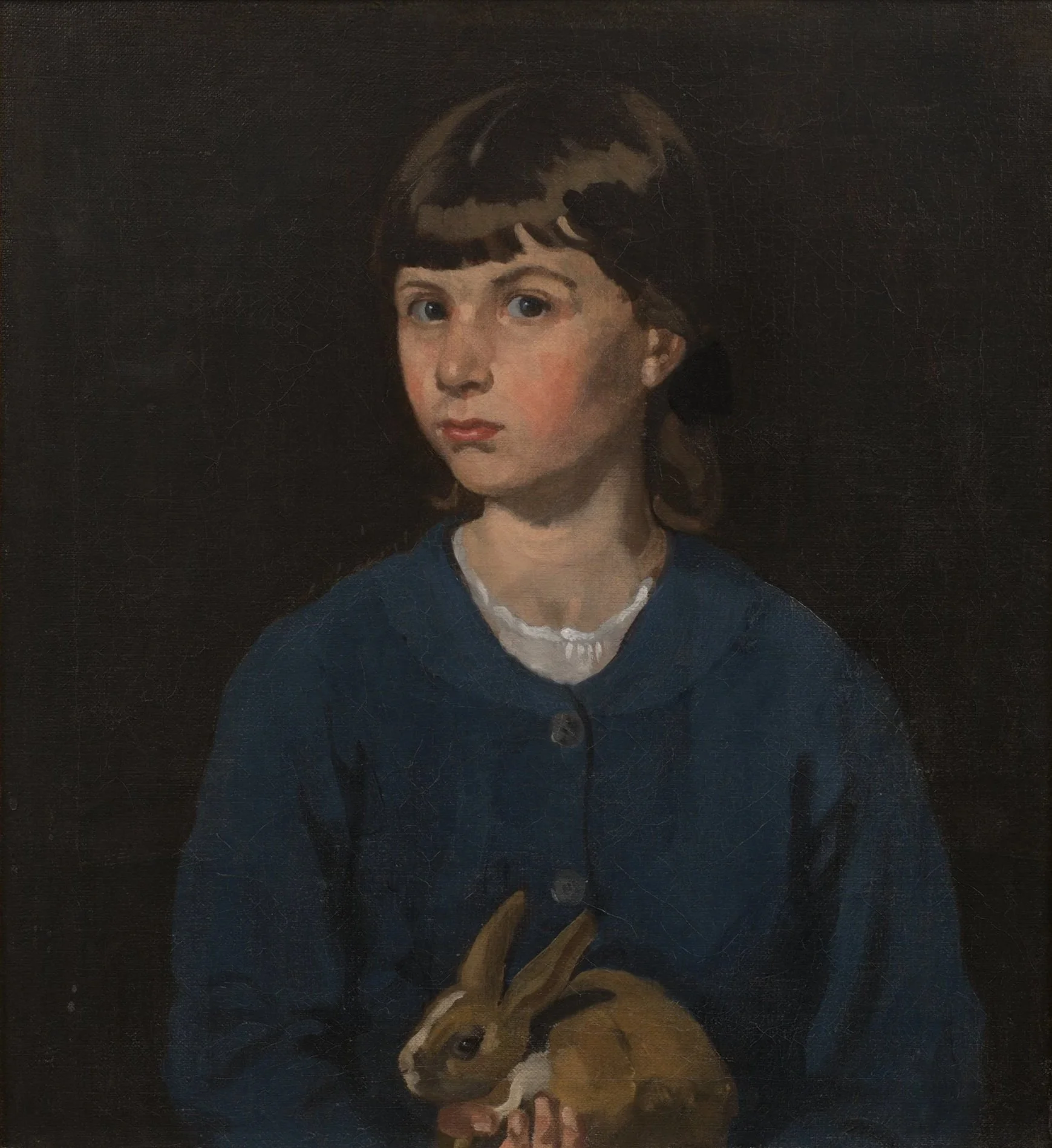
MABEL PRYDE NICHOLSON
Born in Edinburgh, Mabel Pryde Nicholson (1871-1918) was a portraitist of great skill and tenderness, part of glittering bohemian circles in Edwardian Britain and Belle Époque France, and with her husband, the painter William Nicholson (1872-1949), at the head of one of the great dynasties in twentieth-century British art.
Few artists win lasting renown without salting away a significantly-sized body of work and Mabel Pryde Nicholson, who waited until her four children were grown to paint in earnest and died suddenly at 47, wasn’t granted that chance.
Even so, her finest pictures – the figures in Commedia dell’Arte costume; the cryptic, beautifully muted portrait-interiors – all painted in the early 1900s, suggest an artist of such tensile strength that you have to wonder what she might have become.
Her Life

Mabel Pryde Nicholson with her eldest son, the abstract artist Ben Nicholson, circa 1896 (Bushey Museum; on loan from the collection of Nicholas Gibbs)
Selected Artworks
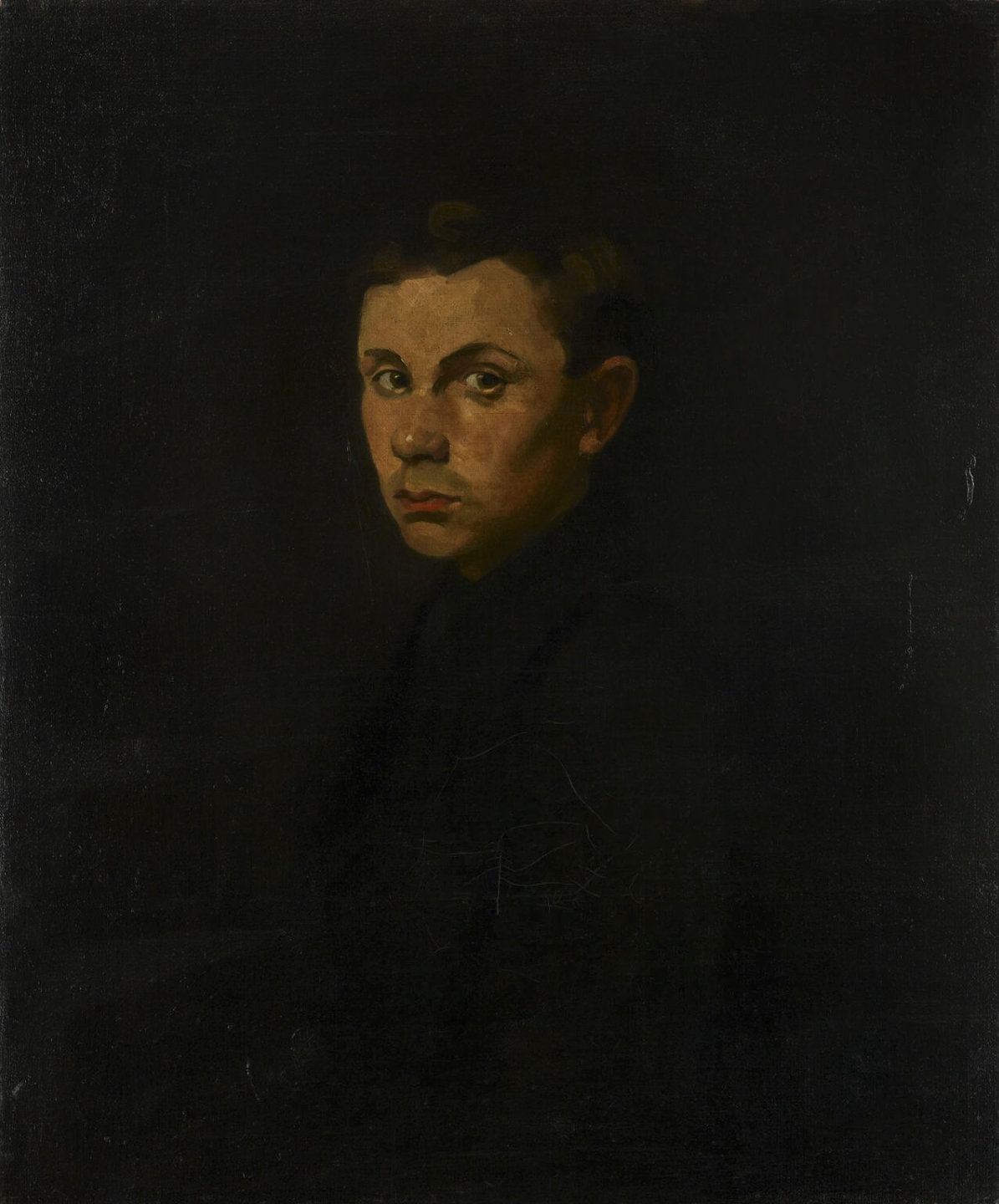
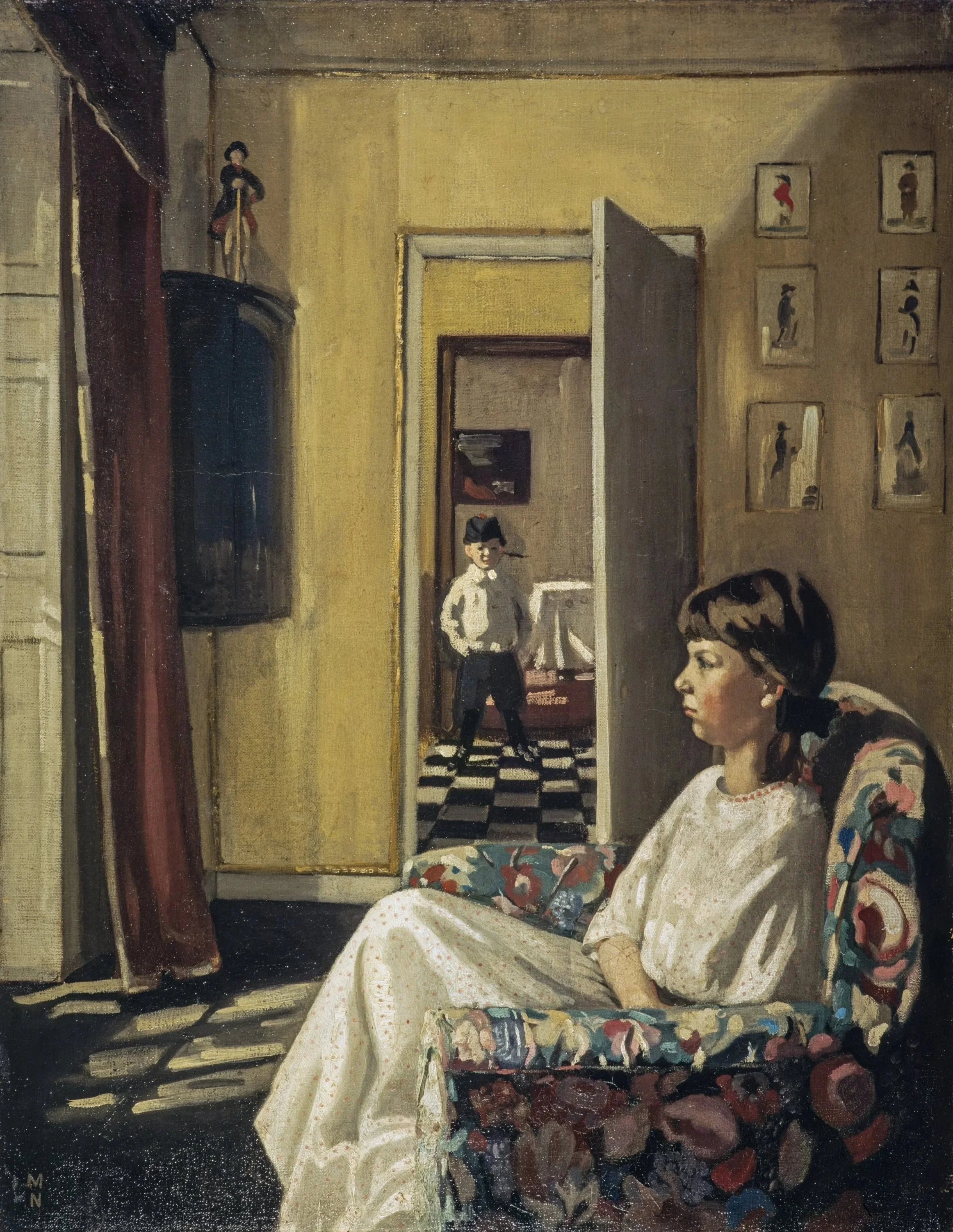
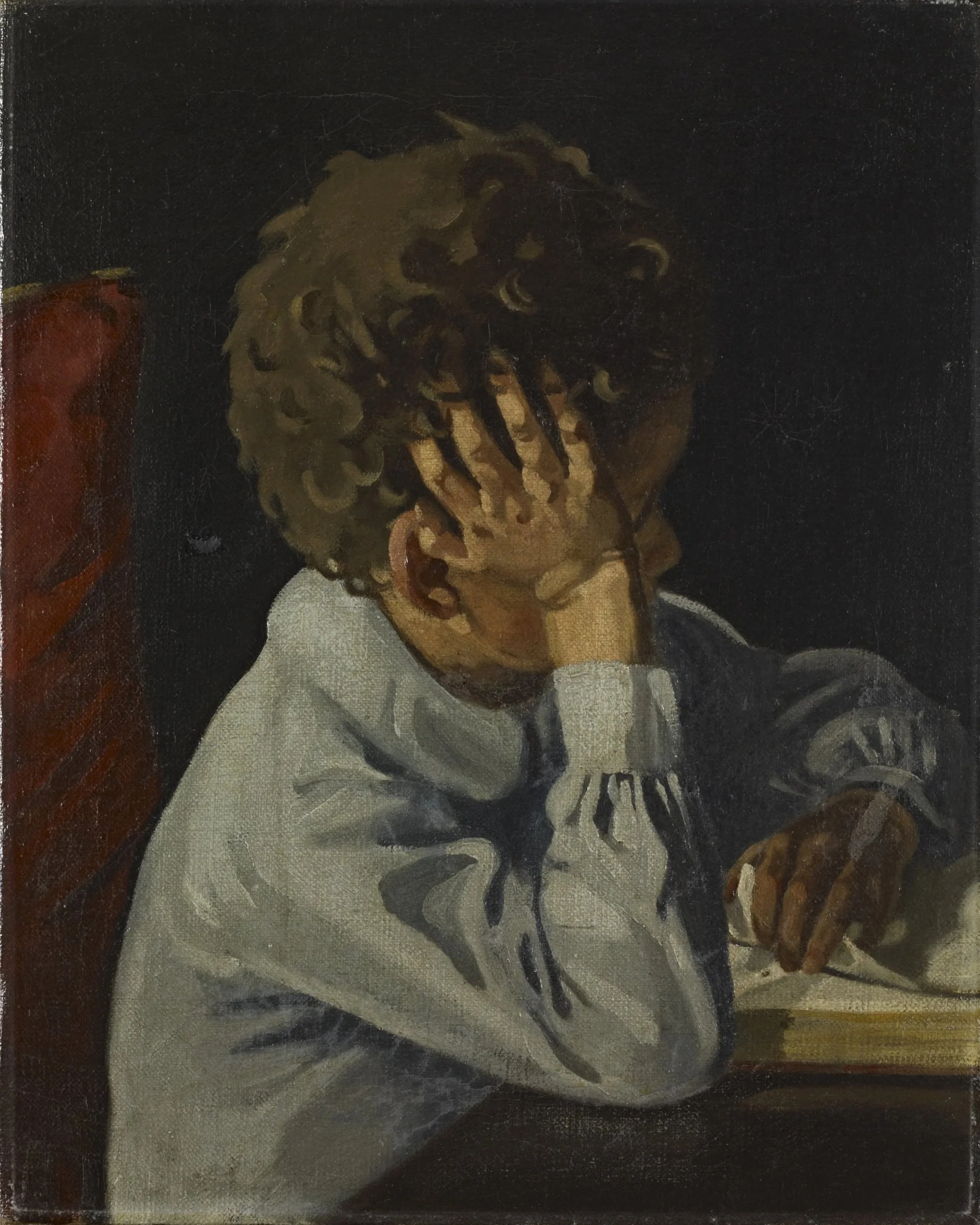

Rottingdean Heritage is a charity, originally created to look after the village Windmill, a prominent feature of the landscape near Brighton. The charity now looks after the Gallery and Museum in The Grange, where Mabel and William lived with their family between 1909 and 1914.
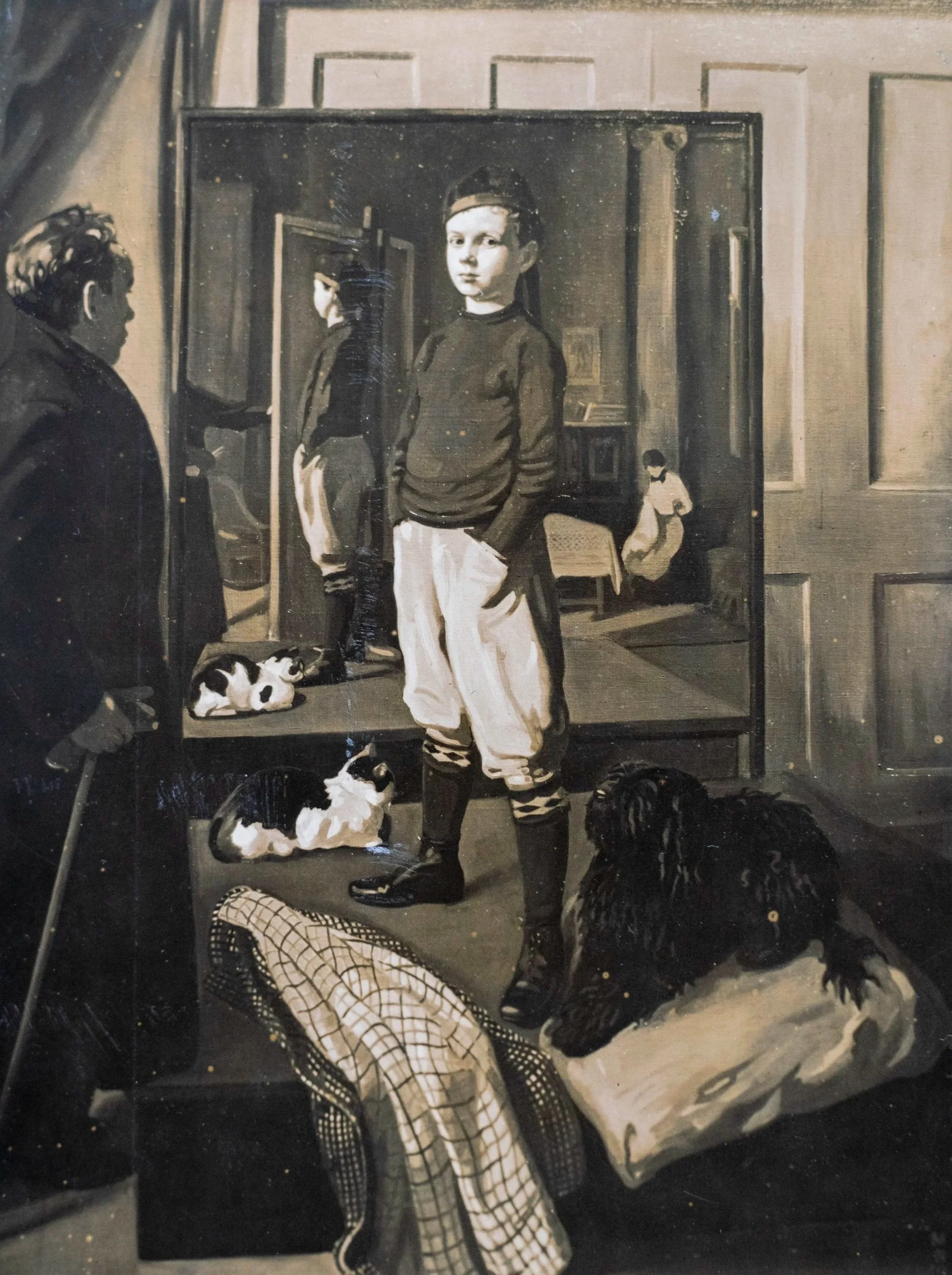
The Lost Paintings
The "List of photographs of MN [Mabel Nicholson's] paintings" compiled by Ben Nicholson in 1918 (Tate archive) and the catalogue to the memorial exhibition of her work held at the Goupil Gallery in 1920 (V&A archive) suggests that at least fifteen of Mabel’s paintings remain unaccounted for.